
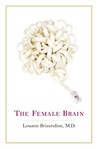
The Female Brain
"A neurobiological map of the female experience, revealing how hormones architect thought, emotion, and behavior across a lifetime."
Nook Talks
- 1The female brain is fundamentally shaped by hormonal chemistry. From in-utero development through menopause, fluctuating hormones like estrogen and oxytocin directly structure neural circuits, influencing communication, emotional processing, and stress response in distinct, observable patterns.
- 2Motherhood induces profound and lasting neurological change. Pregnancy and childbirth trigger structural and functional brain alterations that enhance caregiving instincts, emotional attunement to the infant, and protective behaviors, effectively rewiring a woman's cognitive priorities.
- 3Emotional connection is a primary neurological drive for girls. From infancy, the female brain shows a stronger predisposition for reading facial expressions and forging emotional bonds, a trait supported by neuroimaging studies of mirror neuron and communication center activity.
- 4Adolescent female brain development is a high-stakes hormonal cascade. Puberty unleashes a flood of hormones that hypersensitize the brain to social approval and emotional risk, explaining the intense focus on peer relationships and identity formation during the teenage years.
- 5Menopause represents a neurological transition, not a decline. The post-menopausal brain, freed from the cyclical dominance of reproductive hormones, often experiences a shift toward greater emotional stability, decisiveness, and a reorientation of personal goals and energy.
- 6Gender differences in behavior have deep neurobiological roots. While culture shapes expression, the book argues that many classic behavioral divergences between men and women originate in evolutionarily adapted brain structures and hormonal influences, not mere socialization.
Louann Brizendine’s The Female Brain presents a pioneering exploration of neuropsychiatry, arguing that the distinct architecture and hormonal milieu of the female brain create a unique internal universe. It positions itself not as a work of pop psychology but as a user’s guide to the neurochemical and structural realities that underpin everything from conversation style to maternal instinct. The book frames these differences not as deficits or superiorities, but as specialized adaptations honed by evolution, offering a scientific narrative for experiences many women recognize intuitively.
Brizendine structures her investigation as a life journey, beginning with the fetal brain’s differentiation under a bath of hormones. She details how girlhood is neurologically characterized by a precocious capacity for emotional connection and verbal communication. The narrative then navigates the tempest of adolescence, where estrogen and progesterone amplify the brain’s sensitivity to social connection and emotional nuance, often at the cost of intense inner turmoil. The core of the work examines the adult brain in contexts of partnership, sexuality, and, pivotally, motherhood—which it frames as a period of radical neural reorganization.
The book delves into the neurobiology of romantic attraction, stress response, and communication, contrasting typical female patterns with male baselines. It dedicates significant analysis to motherhood, describing the ‘mommy brain’ as a valid state of cognitive re-prioritization driven by oxytocin and prolactin. Finally, it charts the transition through perimenopause and beyond, contesting the notion of decline by highlighting the potential for increased assertiveness and a shift in cognitive focus as ovarian hormone production wanes.
The Female Brain synthesizes clinical studies, patient anecdotes, and animal research to build its case, aiming to provide an authoritative reference for anyone seeking to understand the biological foundations of womanhood. Its legacy lies in bringing specialized neuroendocrine research into public discourse, empowering readers with a biological framework for personal and interpersonal dynamics. While targeted at women and parents, its insights are presented as essential knowledge for anyone engaged in the complex dance of human relationships.
The consensus finds the book a fascinating and accessible primer, often enlightening for men and women seeking a biological explanation for behavioral patterns. Readers praise its clarity in demystifying complex neurochemistry. However, a significant critical thread challenges its scientific robustness, questioning the extrapolation from animal studies and perceiving an over-reliance on hormonal determinism that risks reinforcing stereotypes. The tone is polarizing, celebrated as revelatory by some and critiqued as reductive by others.
- 1The debate over biological determinism versus social conditioning in explaining gender-based behavior.
- 2Questions regarding the validity of applying animal research models directly to human female neuropsychiatry.
- 3Concerns that the book's findings could be misused to justify gender stereotypes or limit women's roles.
- 4Appreciation for the book's accessible translation of complex neuroendocrine science for a general audience.
- 5Discussion on whether the book empowers women with self-knowledge or reductively confines them to their biology.

Permanent Record
Edward Snowden

The Almanack of Naval Ravikant
Naval Ravikant, Eric Jorgenson

Chip War: The Quest to Dominate the World's Most Critical Technology
Chris Miller

Outliers: The Story of Success
Malcolm Gladwell

Stumbling on Happiness
Daniel Gilbert

The Art of Contrarian Trading
Carl Futia

The Essays of Warren Buffett: Lessons for Corporate America
Lawrence A. Cunningham, Warren Buffett

The Artist's Way
Julia Cameron

The Creative Habit
Twyla Tharp, Mark Reiter

How to Win Friends & Influence People
Dale Carnegie

Breakthrough: The Quest for Life-Changing Medicines
Dr William Pao

Code: The Hidden Language of Computer Hardware and Software
Charles Petzold